Monday, January 23, 2006

Mae West on TV: January 31st

FOR IMMEDIATE RELEASE

New York Playwright Invites You to Come Up & See Mae
The Blonde Bombshell Reappears January 31st on A&E's Biography Channel


New York, NY: Come up and see Mae on Tuesday January 31, 2006 in a special hour-long episode broadcast by A&E's Biography Channel [10:00pm ET]. New York dramatist LindaAnn Loschiavo, whose play "Courting Mae West" will be in a theatre later this year, was tapped by the TV crew to co-star in this hour-long presentation and select the locations central to Mae's days.
• • Since "Courting Mae West" is based on true events during the 1920s when the Brooklyn bombshell was arrested and jailed on obscenity charges, Loschiavo focused on East Coast addresses for this TV episode, some of which are spotlighted in her play.

* * * On the Streets Where Mae Sashayed * * *
Footage was filmed at several locations familiar to Mae West fans:
* * * 62 West 9th Street [now Stephen Lyle's Village Restaurant], an Italian-French eatery known as Paul & Joe's during the early 1920s, a favorite of heavyweight champion Jack Dempsey who introduced it to Mae;
* * * Jefferson Market on Sixth Avenue at 9th Street, the 19th century courthouse where Mae was on trial several times during 1927-1929 [now a dilapidated library, where worn limestone bits pelt pedestrians];
* * * Cypress Hills Cemetery in Brooklyn, where it took the magic wand of Boro President Marty Markowitz to open the creaky pearly gates for the TV cameras;
* * * 57 East 54th Street, Bill's Gay Nineties, where Mae toasted her vaudeville and Broadway buddies; and other locales.
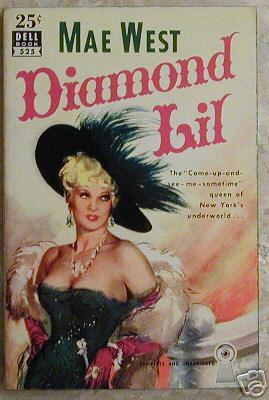
• • When Mae wasn't occupied with a play or a film, some of her favorite activities were organizing a séance, consulting a psychic at Lily Dale Assembly, or penning a book about ESP. Her passion for the paranormal led her to take part in séances organized by Texas Guinan at Manhattan hotels or backstage at the Royale Theatre [242 West 45th Street], before matinee performances of "Diamond Lil" and "The Constant Sinner."
• • On August 17th, 2005, a birthday gala for Mae in a haunted mansion had featured a séance attended by Loschiavo along with those who knew Mae such as TV legend Joe Franklin. The TV crew recreated this séance, led by psychic Chris Fleming, who connected with some of the entities therein, playing peek-a-boo in hand-held light.
• • Before the TV episode airs, a special press party in Manhattan will announce this. Media and press photographers are welcome to attend.
• • Sponsorship opportunities are available.

• • • • MEDIA ADVISORY • • • •
• • WHAT: DEAD FAMOUS: GHOSTLY ENCOUNTERS. Each week, hosts Gail Porter, a self-confessed skeptic, and Chris Fleming, a psychic able to detect paranormal events beyond the range of five senses, set off to investigate reported sightings of legendary figures such as Mae West [or James Dean, Lucille Ball, Jim Morrison, or Marilyn Monroe]. Part travelogue, part "X-Files," DEAD FAMOUS: GHOSTLY ENCOUNTERS explores the beloved locales of the world's most famous departed to unveil the real story of their lives... after their deaths.
• • WHEN: Tuesday evening 31 January 2006 [10:00pm ET].
• • WHERE: The Biography Channel [TVPG].
• • WHO: Psychic Chris Fleming, Gail Porter, LindaAnn Loschiavo, Joe Franklin, Conrad Bradford, along with several Mae West fans and friends.
• • WEB: http://MaeWest.blogspot.com
________________________________
Source:http://maewest.blogspot.com/atom.xml
Add to Google

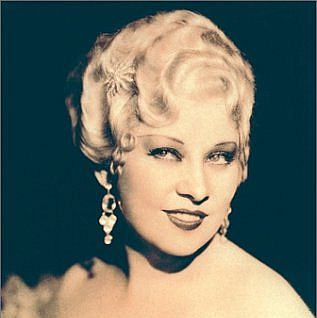
• • Photo: Mae West

Mae West.

Sunday, January 22, 2006

Mae in Her Heyday

Australian writer Joel Greenberg discusses the last biography of Mae West in this article, "Mae in motion"
[published 21 Jan 2006]:

• • • • Mae West: It Ain't No Sin • • • •
By Simon Louvish [Faber & Faber, 491pp, 2005]

I ONCE had the opportunity to observe Mae West at close range. At 82, standing beside the 101-year-old Adolph Zukor, founder of Paramount Pictures, she was the main attraction at a 1975 Hollywood studio function marking the end of shooting of a deservedly forgotten film, Won Ton Ton, the Dog Who Saved Hollywood. Althoughs eemingly well preserved, her physical components - - hair, eyelashes, teeth, bosom - - looked as though they owed more to art than nature, giving her the appearance of a slightly animated waxwork. Yet this was a woman who had created her own legend, who in her heyday was, as she justly claims in her 1959 memoirs, "the most famous and popular motion picture star in the world". And, she might have added, the most notorious, largely responsible for the 1934 tightening of the Motion Picture Production Code that kept American films straitjacketed in hypocrisy and immaturity for the next 30-odd years.

• • As Simon Louvish points out in this latest biography, West's career as an important movie star was quite brief (1932-37) and began when she was in her 40s, having been preceded by years of trouping in vaudeville and burlesque and on the legitimate stage.
• • What Louvish fails to mention is that she was half-Jewish and thus part of that extraordinary generation of American entertainers who came to prominence in early 20th-century New York and included Sophie Tucker, Fanny Brice, George Burns, and the Marx Brothers.
• • Born in 1893 and debuting on stage in 1911, West took some time to develop her unique persona, modelled in part on such stars as Eva Tanguay but with an in-your-face sexuality all her own. By the time she'd written and starred in such plays as Sex and Diamond Lil, and served eight days of a 10-day jail sentence for obscenity in 1927, she'd perfected the slow libidinous drawl, sensual slouch and suggestive double-entendre repartee that became her trademarks.
• • The amazing makeover job done on her appearance by Paramount when she entered films in 1932 transformed what Louvish aptly calls "a somewhat dumpy, short and almost nondescript figure" into a platinum-blonde glamour queen, banishing her double chin, downplaying her generous physical proportions and concealing her unlovely legs beneath floor-length gowns.
• • An instant screen hit, West was by 1934 America's highest-paid performer, earning $US399,166 a year, with her films, most of which she also wrote or co-wrote, box office smashes everywhere.
• • Today, like those of her contemporaries Greta Garbo and Marlene Dietrich, they've achieved a fresh lease of life on DVD, their pictorial beauty stunningly restored.
• • West was more than just a movie star, however. A pioneer women's liberationist, she defiantly asserted their claim to sexual equality with men, proclaiming in her memoirs: "The one departure I have made from the average citizen's way of life has been personal and sexual, and here I have only done openly what comes naturally; I have never felt myself a sinner, or committed what I would call sin." For her, the double standard, not sex, was the real obscenity.
• • Her film vogue more or less over by the 1940s, West dabbled in spiritualism and invested shrewdly in property, furs, and jewels. She also resumed her stage career with a successful revival of Diamond Lil and an idiosyncratic Westian take on Catherine the Great. Following the example of Dietrich, she debuted in Las Vegas in 1954 with a chorus-line of muscle-men, an act she subsequently toured throughout the US.
• • She did appear in two more films before her death at 87 in 1980, the bizarre Myra Breckinridge (1970) and the inept Sextette (1976), but by then she had become grotesque, a campy joke.
• • Louvish has had the advantage of access to a recently opened archive of West memorabilia held at Los Angeles' Academy of Motion Picture Arts and Sciences, which includes manuscripts of her plays, some previously unknown, and 2000 pages of jokes she assiduously collected for future use (many of her most celebrated quips were not strictly original).
• • While these documents help Louvish flesh out his portrait, they ultimately add little to what we already know. For me, the best Mae West biography remains Maurice Leonard's 1991 Empress of Sex.
• • "Mae in Motion"
• • by: Joel Greenberg
• • © The Australian 21 Jan 2006
- - - From http://www.theaustralian.news.com.au/ - - - ________________________________
Source:http://maewest.blogspot.com/atom.xml
Add to Google

• • Photo: Mae West

Mae West.

Saturday, January 21, 2006

No Worse There Is None


The death of 59-year-old Matilda West "was a staggering blow," admitted Mae, who was inconsolable. Born in December 1870 in Bavaria, Matilda died in an apartment at 95 Euclid Avenue, Brooklyn, perhaps being nursed there by relatives. [Matilda and Jack owned a house on 88th Street in Woodhaven, Queens at the time.]
• • On 27 January 1930 Mae West attended the funeral.
• • Gangster Owney Madden waits for her by the door of the sedan, wearing a dark topcoat with a Persian lamb collar.
________________________________
Source:http://maewest.blogspot.com/atom.xml
Add to Google

• • Photo: 27 January 1930 Mae West, leaving the funeral parlor

Mae West.

Sunday, January 15, 2006

Mae: January 19 Wedding

It all started on 19 January 1889 in Greenpoint, Brooklyn with a wedding belle.
• • Sometime in the late 1880s... Jack was sidetracked from his ambitions [as a boxer] by a young German immigrant, Matilda Delker. Known by her friends as Tillie, she was the daughter of Christina and Jacob Delker, who were married in Germany in 1864. She was born in 1870, probably in Wurttemberg.... She arrived in the United States in 1882....

• • Several factors probably compelled the Delkers to leave Germany.... Anti-Semitism may have driven them out - - Mae had even the most discerning observers convinced that her mother was Jewish - - but by the time the Delkers reached America, they were Lutherans. It is more likely that they were drawn to the United States by economic success enjoyed by relatives....
• • [page 8] Tillie [Mae West's mother] met resistance as she aspired to follow in [Lillian] Russell's footsteps. An acting career for a newly arrived German girl... was a remote dream, especially with parents who forbade the pursuit of such a disreputable profession.... Mae claimed that Tillie secured a position as a "corset and fashion model," a profession accessible to an immigrant seamstress with unsteady English. If true, Tillie pursued this without her parents' consent. It was far from respectable; buyers were known to make sexual advances, and she could not have rejected their demands and kept her job long.
• • Matilda may well not have rejected them... young working-class girls of Tillie's generation, known as "tough girls," commonly rebelled against their parents' standards and experimented with premarital intimacy. In Tillie's adolescent world, crowded tenements and eroded parental supervision allowed young people to experiment with sex. The ritual of working-class dating, in which young male suitors footed the bill for their impoverished dates, often resulted in an exchange: cultural amusements for sex.
• • Ultimately, it would be Tillie who nurtured Mae, shaping her attitudes toward sex, men, and money. Mae recalled her parents battling over her early flirtations with boys. "My father used to want me to come home and all that, but my mother used to say, 'Oh, let her go, she can take care of herself.'" Mae recalled, "I guess she wanted me to learn all that right at the beginning." In many ways, Tillie was not only the motivator for Mae West's libertine ideals but the prototype for her sexually transgressive persona.
• • Tillie's youthful defiance soon met its end with Jack West. Initially, the couple formed a passionate bond.... Mae told an interviewer, "my father had swept her off her feet."
• • ... Jack and Tillie had much in common. Both rebelled against parental expectations, Jack through sports and Tillie through her dreams of a theatrical career. ...
• • On 19 January 1889, in Greenpoint, Battling Jack West and Tillie Delker took their wedding vows before a local minister with Jack's sister Julia West acting as maid of honor.
Source: Jill Watts, Mae West: An Icon in Black and White [NY: Oxford University Press, 2001], pages 4-9.
________________________________
Source:http://maewest.blogspot.com/atom.xml
Add to Google

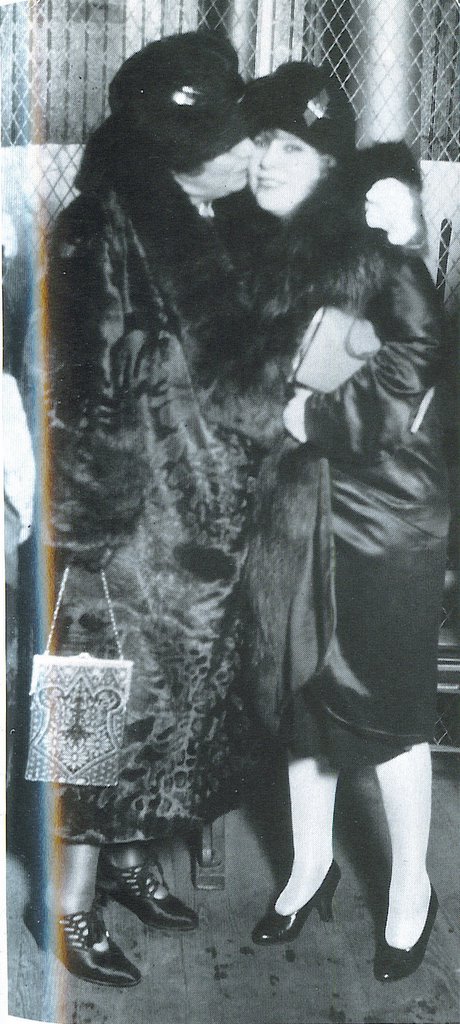
• • Photo: 27 April 1927 Mae West, leaving prison in New York, greeted by her mother

Mae West.

Tuesday, January 10, 2006

Mae Impersonator Craig Russell

Forty two years: the life of Mae West impersonator Craig Russell was short and bittersweet.
• • "Craig Russell" was the stage name of Russell Craig Eadie [10 January 1948 - 30 October 1990), a Canadian female impersonator.

• • His impersonations also included Carol Channing, Bette Davis, Barbra Streisand, Tallulah Bankhead, Marlene Dietrich, Bette Midler, Anita Bryant, Peggy Lee, and Judy Garland. While performing, he always spoke and sang in the voices of the celebrities he was impersonating.
• • Born on January 10th in Port Perry, Ontario, Russell Craig Eadie was fascinated by show biz glamour from an early age. When he was 13 and still in high school, he formed the Mae West International Fan Club. By the age of 15, Eadie had moved to Los Angeles to work for Mae West, a pivotal experience in his show business education. He soon returned to Toronto to finish high school but dropped out for good, toiling as an insurance clerk before returning to California in 1967.
• • Eadie moved in with Mae West, becoming her personal secretary for seven months, assisting with her fan mail and honing his impersonations of her. In 1968 Eadie returned to Toronto, moved in with Margaret Gibson, and enrolled in hairdressing school. By day, he worked as a professional hairdresser [1969 - 1971]. By night, he pursued a career onstage.
• • By 1971, he was a regular headliner in Toronto gay clubs and had a burgeoning international following.
• • In 1977, Russell starred in the film Outrageous!, based on a short story written by Gibson about their time as roommates. Two more films followed.
• • Though he publicly identified himself as gay rather than bisexual, Russell wed close friend Lori Jenkins in 1982. They remained married until his death at age 42 from a stroke (related to complications from AIDS) in 1990.
________________________________
Source:http://maewest.blogspot.com/atom.xml
Add to Google

• • Photo: Craig Russell as Mae West

Mae West.

Friday, January 06, 2006

Mae: Brits and Needles

Bad old boys:
Marlon Brando, Warren Beatty, Stewart Granger, Mae West - some of Hollywood's greatest stars were also its worst advertisement, says Chris Petit

Under discussion in the British newspaper The Guardian: four recent biographies, nicely sliced and dissected by the London critic Chris Petit.

• • . . . . Marlon Brando's ego was more rock star than actor. The Naked Actor offers an insider's portrait of Hollywood. Brando has the last word: "In this town fucking is a technique you develop, like dentistry. You get good at it, you're going to do a lot of fillings."
• • Warren Beatty did an awful lot of fillings. He was initially cast in the same rebel mold as Brando and James Dean when, in reality, he was a prototype yuppie careerist. He cultivated influential mentors, several of them homosexual and smitten. . . .
• • Stewart Granger's mother had an arrangement with an"uncle" that left the boy shamed by his father's emasculation. . . . Granger, a superficial charmer, was arrogant, bigoted and chippy in equal measure. . . .
• • Compared to Marlon Brando, Warren Beatty, or Stewart Granger, Mae West was a paragon of the Protestant work ethic. Few worked harder in Hollywood. Her famous sexual innuendo and throwaway style were the products of much rewriting and rehearsal. She remains a theatrical, and rather Victorian, figure and the film career was limited by censorship battles and studio politics, but, as Simon Louvish's diligent biography shows, she is unique, and heroic in the history of Hollywood for putting her espousal of the pleasure principle into her work.
• • Titles: • •
Marlon Brando: The Naked Actor by George Englund (271pp, Gibson Square Books, £15.99)
Warren Beatty: A Private Man by Suzanne Finstad (587pp, Aurum, £20)
Stewart Granger: The Last of the Swashbucklers by Don Shiach (275pp, Aurum, £18.99)
Mae West: It Ain't No Sin by Simon Louvish (491pp, Faber, £20)
• • Book Reviewer: Chris Petit
• • Condensed from a review in The Guardian • Saturday 31 December 2005
- - http://education.guardian.co.uk - -
________________________________
Source:http://maewest.blogspot.com/atom.xml
Add to Google

• • Photo: Mae West (born 1893 in Brooklyn, NY)

Mae West.

Friday, December 30, 2005

Mae Bio: Me-Oh-My-Oh

From a new biography of Mae West, here's an excerpt:
Liberty belle feels the heat
by Simon Louvish
• • • • • • • • • • • • • • • • • • • • • • • • • •
• • MAE WEST ran out of takers for her exploration of society's rejects at a time when more and more people were falling over the edge to join their ranks. And there were fewer and fewer theatres available in the straitened circumstances that now had a new name: the Depression.
• • Opportunities on the New York stage were sinking fast. Even on the other side of the continent, economic woes were mounting, unemployment rising, movie attendances dropping. Hollywood studios were looking for new ideas, novelties, sensations that could revive sagging fortunes.
• • Now that the movies could talk, sing and babble, new voices were wanted, and the sassier the better.
• • Mae took time to adjust to the pace of Hollywood in 1932. Settling down at the Rossmore Apartments, Mae claimed that she found doing nothing for $5,000 a week somewhat unnerving, and the part written for her in the script she was (eventually) sent by Paramount appeared banal and unrewarding — — at least until she could rewrite the lines.
• • We now know that Mae was never doing nothing, her spare time being spent in continuous production of her notes, gag folders, and quips. But as she was to write in her autobiography: "It was a new medium, a technique I had to learn, bend to my will and forget in order to give a natural performance." The studios, Mae soon discovered, were "giant factories turning out the same length of scented tripe, dressed up with the same rubber-stamp features of large cow-like heads, mammary glands, and 10-foot-high close-ups of nostrils you could drive a Cadillac into."
• • Mae could well have been worried by these great close-ups disclosing the fact that, as some shrewd journalists had surmised, she was about to breast the 40-years-old tape rather than the official 33 marker, wondering how she could re-enact the trick that the distance of the stage and theatrical make-up enabled her to carry off.
• • She need not have worried. In 1934 Mae became the highest paid performer in the US, bar none, with an annual income, according to the press, of $399,166.
• • While her Belle of the Nineties was not as big a hit as She Done Him Wrong and I'm No Angel, these were to remain on the books as Paramount's highest grossing pictures for the early years of the 1930s.
• • But comedy was moving on, with Frank Capra's It Happened One Night, made for Columbia in 1934 with Clark Gable and Claudette Colbert, winning five Oscars and establishing a new romantic but socially more realist format.
• • And time was taking its toll on Mae, despite all her endeavours to ignore the incoming tide.
• • In 1935 when Paramount sought to re-release She Done Him Wrong and I'm No Angel, censor Joseph Breen wrote to his colleague Will Hays that "it is our judgment that no successful effort can be made to cause them to be entirely unobjectionable to the production code."
• • Just a month before, the US Customs Service had banned Mae's 1932 novel of Diamond Lil as obscene. The two movies were classified by the Production Board as class one: "Pictures which should be withdrawn immediately and not again released."
• • It was in this atmosphere that Mae laboured to produce the rest of her '30s movies, from Klondike Annie through to My Little Chickadee. The gates were shut, and all but padlocked, on Mae. World War II itself and the great shaking that it gave American life did not move Breen one inch. The code's provision that foreign nations should not be offended constrained the making of movies that would be overtly critical of Nazi Germany, or fascism in general, until the US entered the war.
• • In 1949, Breen was again writing to Paramount, this time to executive Luigi Luraschi: "With further reference to the question of the reissue of the Mae West 1933 production I'm No Angel ... no good will accrue to the industry among right-thinking people with a release of a Mae West picture. On the contrary, it would appear to me that we would expose ourselves to the charge that we were 'letting down the bars'; that we were again making 'filthy pictures', as was the charge levelled against the industry, from a thousand sources back in 1933-34."
• • And for those who still dreamed of movies that nevertheless challenged the status quo, the era of senator Joseph McCarthy and the Hollywood Ten would soon provide further deterrence. Without Breen's zealous witch-hunting in the '30s, McCarthyism might not have had so potent a precedent to root out transgression in American cultural life.
• • Mae was to make one wartime comeback movie, The Heat's On, in 1943. But at the beginning of the '40s her creative energies were focused on her return to the stage. . . .
• • Edited extract from a new biography — — Mae West: It Ain't No Sin by Simon Louvish [UK: Faber & Faber]
Condensed by the editorial staff of The Australian: http://www.theaustralian.news.com.au/

________________________________
Source:http://maewest.blogspot.com/atom.xml
Add to Google

• • Photo: Mae West (born 1893 in Brooklyn, NY)

Mae West.

Thursday, December 29, 2005

Mae & Men in Uniform


It was 1917 and Congress had just declared war in the United States.

• • During 1917-18, many entertainers performed shows for soldiers and sailors gratis. In her autobiography, Mae West recalled an audience comprised of "the French in crayon blue, the British in khaki and swagger sticks." Until the Armistice was signed, Mae did free shows on Sundays for military men at the Casino Theatre.
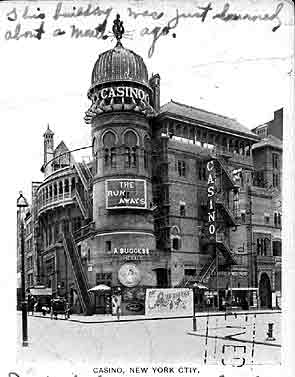
• • Situated on Broadway and West 39th Street, the fanciful pseudo-Moorish playhouse was built in 1882 and demolished in 1930.
________________________________
Source:http://maewest.blogspot.com/atom.xml
Add to Google

• • Photo: 1918 Mae West (born 1893 in Brooklyn, NY)

Mae West.

Wednesday, December 28, 2005

Mae & The Great Debaters


Melvin B. Tolson was a fascinating Black man with a compelling story, in the opinion of Academy Award-winning actor Denzel Washington.
• • Washington plans to direct The Great Debaters, a movie about Tolson’s Wiley College debate team. On April 1, 1935, the team from Wiley, a black college in Marshall, Texas, upended the debate arena by beating the defending national champion University of Southern California.
• • Joy Flasch, who penned a biography on Melvin B. Tolson, included this anecdote:
• • “When Mae West heard about the amazing record of the little Texas team, she asked to meet it, and for years Tolson proudly displayed the autographed picture she gave him.”
• • Intellectual talent and titles, though, did not shield the team from the overt and sometimes violent racism of the time and region. . . .
• • Text condensed from: "Star to play Tolson" By James S. Tyree
THE NORMAN TRANSCRIPT (NORMAN, OK)
URL: http://www.adaeveningnews.com
________________________________
Source:http://maewest.blogspot.com/atom.xml
Add to Google

• • Photo: 1935 Mae West (born 1893 in Brooklyn, NY)

Mae West.

Saturday, December 24, 2005

Mae West: You've Got Male

The year was 1916. Matilda West urged her daughters to put together a sister act.
"Mae West and Sister" appeared at Keith and Proctor's Fifth Avenue Theatre [27-31 West 28th Street, between Fifth Avenue and Broadway]. On the same bill was a Fatty Arbuckle film, a Keystone comedy.
• • Mae and Beverly's vaudeville turn included popular Black songs that Mae had previously found success with: "They Call It Dixieland" and "Walkin' the Dog," their finale, for which Mae appeared in a man's tuxedo and top hat and Beverly wore feminine frills.
________________________________
Source:http://maewest.blogspot.com/atom.xml
Add to Google

• • Photo: 1916 Mae West (born 1893 in Brooklyn, NY)

Mae West.

Thursday, December 22, 2005

Mae West: She's Game

Approaching Christmas Eve - - and still stuck for a good idea? Consider getting a copy of EVE's Quest and, yes, Mae West knowledge will help you score points.

• • WHO: Two Montreal moms Joanna Broadhurst and Odette McCarthy conceived the game. Artist Gina Raposo mid-wifed the concept, and graphic designers Angelica Hardy and Lydia Moscato nursed along the playful packaging.
• • WHAT: About 1,000 questions focus on facts about female accomplishment in the arts, sports, politics, onscreen, pop culture, etc. From Mother Teresa to Mother Goose, Mae West to Marilyn Monroe, Barbie to Body Shop, PMS to Title IX, Queen Latifah to Queen Victoria, the EVE's Quest board game will keep you laughing while teaching you amazing details about women. Up to six players use trivia, charades (try acting out a placenta!), songs, sketch pads, and intuition to move along the board and collect letters to spell out five winning titles including Diva, Goddess, Mother, Sister, and Woman.
• • WHAT ELSE: While EVE’s Quest celebrates women in all their diversity, the game is designed for everyone from ages 14 to 114. The Canadian Breast Cancer Foundation benefits by receiving $2 from each game sold.
• • WHY: Joanna Broadhurst: “We noticed that women’s issues and accomplishments were missing from many of the popular trivia or charades-type games available on the market. Such a small, almost invisible percentage of questions or activities ever relate to women’s lives. We decided to change that by making women the focus.” Can one game help correct the imbalance of predominating male role models populating our collective conscience? Who knows? But it sounds like this might be a fun one to spend an evening.
• • WIT: If you think you know everything about women, answer these:
• • What year did Kotex introduce sanitary napkins?
• • True or false? From 1964 to 1983, the Playboy Foundation donated over $2-million, or more than 25 per cent of its budget, to American organizations defending women's rights. [True!]
• • Which much-imitated 1930s actress (Mae West, Ava Gardner, or Marlene Dietrich) said the famous line: "It's not the man in your life but the life in your man"? [Mae West wrote this quip and others for her film I'm No Angel.]
• • AND HOW: Mae West called life a man's game and added, "I just happen to be smart enough to play it their way."
________________________________
Source:http://maewest.blogspot.com/atom.xml
Add to Google

• • Photo: Mae West (born in Brooklyn, NY in 1893)

Mae West.

Monday, December 19, 2005

Mae West: Homeward, Angel

What a world it would be if every convicted felon could turn her courtroom conviction and incarceration into a million-dollar script. And what sweet victory it would be to recreate a real trial [in 1927 at Jefferson Market Court in New York] as a humorous Hollywood replay during which the accused turns victrix.


___________________________________________
• • Ladies and gentlemen of the jury, we present Mae West, re-doing the 1927 Jeff effort as a 1933 box office triumph in "I'm No Angel" [premiered 14 October 1933, Paramount Theatre].
• • Actor Gregory Ratoff plays the Prosecutor; Walter Walker plays the Judge; Cary Grant plays Jack Clayton.
• • Mae West, adorable avenging angel, is Tira the lion tamer.
• • Because at Jefferson Market today we need a little Christmas angel. . . .
Source:http://maewest.blogspot.com/atom.xml
Add to Google

• • Photo: Mae West on trial in 1927 & on screen in 1933 No Soy Ningún Angel

Mae West.

Saturday, December 17, 2005

Mae West in 1912


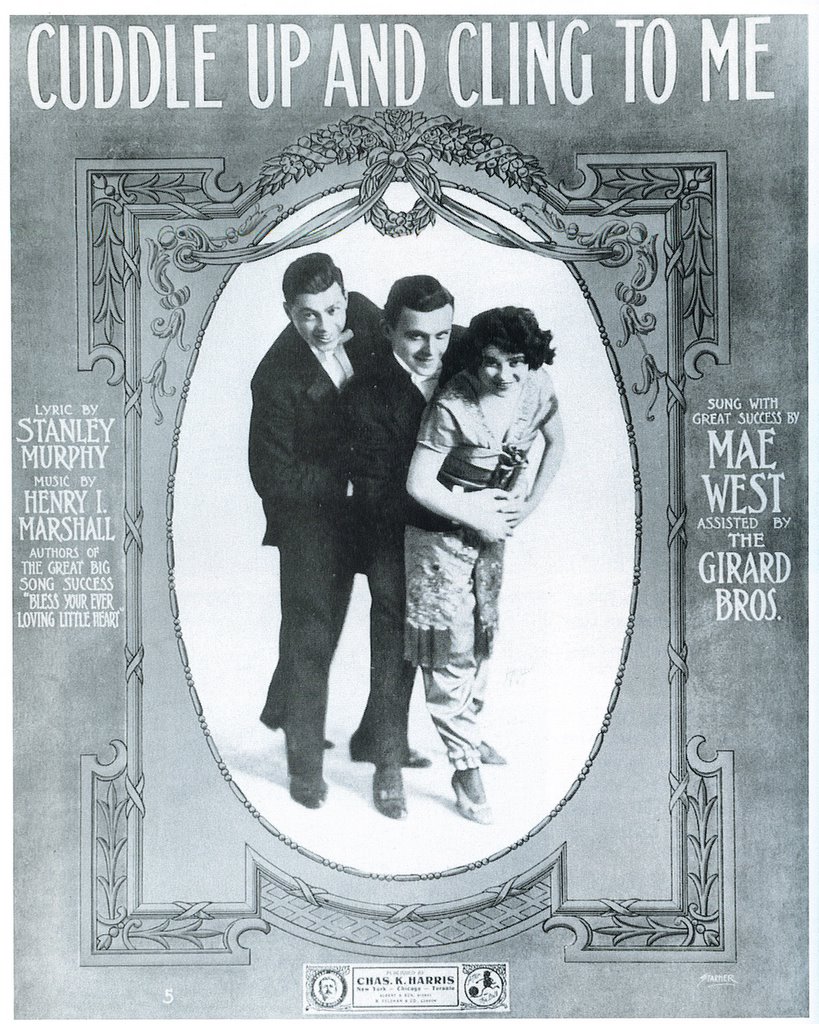
Still in her teens, still slim, and still a brunette, Mae West was very busy in 1912. At Poli's Palace Theatre in Connecticut, the energetic entertainer appeared in vaudeville with the "Girard Brothers" [-- two dancers named Bobby O'Neil and Harry Laughlin]. During their act, Mae did a sultry rendition of "Cuddle Up and Cling to Me" as she danced provocatively.
• • After the third performance, the trio was fired. "Her Wriggles Cost Mae West Her Job," read one newspaper headline.
Source:http://maewest.blogspot.com/atom.xml
Add to Google

• • Photo: a brunette Mae West with the Girard Brothers on sheet music
Mae West.

Friday, December 16, 2005

Mae's Sister Beverly


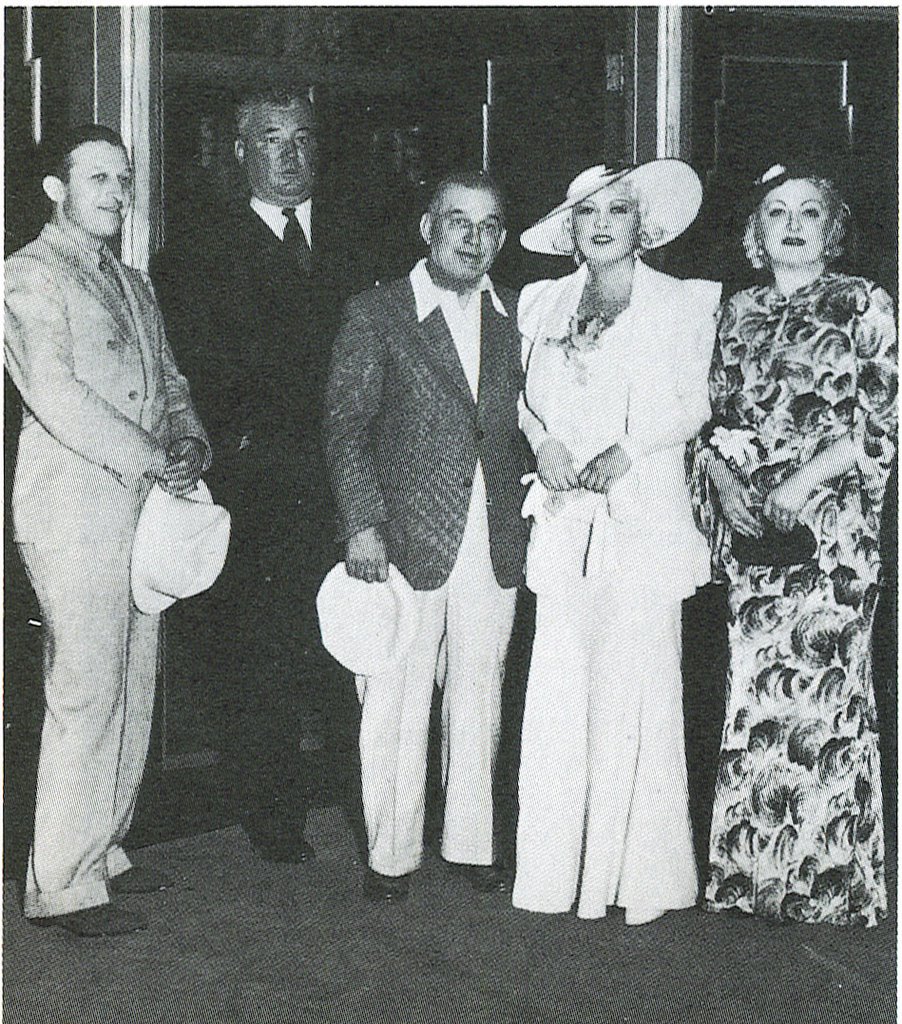
Mae's kid sister never liked her birthname "Mildred West" [December 1898 - March 1982] and so, upon launching a professional career, she became "Beverly Osborne." When this picture was taken, she was 36 years old. She is being remembered on her birthday.
Source:http://maewest.blogspot.com/atom.xml
Add to Google

• • Photo: Mae West with Jim Timony [her manager], her father, and her two siblings, September 1934 in Hollywood. Mae's father and 34-year-old brother each hold a hat.
Mae West.

Thursday, December 15, 2005

Mae West's Protégé Steve Rossi

Mae West's protégé Steve Rossi was in the news this month.

• • A recent article in The Desert Sun [7 December 2005] announced that TV writer Allan Blye is taking his old singing act on the road to generate interest in the second season of his revised musical "Senior Class: Celebrating the Golden Years" (starting thia month at the Cinemas Palme d' Or in Palm Desert). Personable Gary Collins has replaced the more operatic Julius LaRosa, bringing new interpretations to his role as Frank. But all other cast members return, including Ronnie Schell, Steve Rossi, Anna Maria Alberghetti, Ruta Lee, and Marcia Rodd.
• • In his cast bio, Steve Rossi [who plays "Gus"] hits the highlights:
Appeared in "Going My Way" with Bing Crosby at age 6. Toured with Mae West in 1954. Became part of the Allen & Rossi comedy team in 1957, appearing on more than 700 TV shows, including an appearance on "The Ed Sullivan Show" right after The Beatles. Films: "The Jolson Story" and "The Last of the Secret Agents." Sold 2 million copies of "More," nominated for an Oscar. Currently: Rossi is celebrating his 55th year in show business.
• • Here's what he omitted: Mae West told him that his birthname Joseph Charles Tafarella was not marquee-friendly. Mae West re-christened the singer STEVE ROSSI during their 1950s Las Vegas tour, which ended when the Army drafted him.
• • [Extracted from a Desert Sun article by Bruce Fessier; email: Bruce.Fessier@thedesertsun.com - Tel: 760-778-4622.]
Source:http://maewest.blogspot.com/atom.xml
Add to Google

• • Photo: Steve Rossi [circa 1957]
Mae West.

Wednesday, December 14, 2005

Mae West: Famous Lies?

President Bush lied and led the country into war: okay, Bush finally admits it.
Though the lies of actors or actresses have far less serious consequences than a statesman's deceitfulness, what DID Mae West lie about? Lots of things.
• • Here's an example.
When she got to Hollywood in 1932, 39-year-old Mae was often kidded by columnists, who constantly drew attention to her weight. Ruse: Mae started telling people that her dimensions were the same as the Venus de Milo, which meant that her measurements were "perfect." And George Raft - - not Mae - - was the star of the film
Night After Night. Thanks to her former lover Raft, Mae was cast as his old girlfriend Maudie Triplett, a featured part -- her first screen role.

————————————————————————
• • Originally published: 20 June 1932 IDN
• • Newspaper: Los Angeles Illustrated Daily News
• • IDN-Columnist: Eleanor Barnes
Mae West - - big and buxom - - no indeed, svelte and blonde, blew in on the Chief from New York, tired, not cranky, but peeved at the Great American desert for providing her with weather that was too torrid for even Mae to work in. "Diamond Lil" has yet to see a movie studio first-hand. She has never even seen a talkie made - - even in Gotham. But this oversight will be a thing of the past today when Mae gets over to Paramount studios where she is to play the
leading role in Night After Night.
• • RARE TRIO • •
Mae West, Helen Morgan, and Texas Guinan - - three night club queens only come West occasionally, and Mae said she put over the fastest deal she ever closed with Paramount. She signed up Wednesday, left the same night and - - as she had negotiations to put on "Constant Sinner" in Chicago, and had to stop off in the Windy City - - had to turn down staging this play in order to make a screen debut.
• • "Boy, have you
reduced!" the reporters commented.
• • "
Reduced - - whatcha mean, reduced?
— Don’t get me wrong - - I’m not that large and never was - - when I played ‘Diamond Lil,’ the role called for over-stuffing and I was fixed up like one of those comfy chairs you have in your swell movie drawing rooms. "I’m weighing 120 pounds and even your slim movie stars don’t strip down that small - me if I’m wrong."
Here’s what "Diamond Lil" has on her mind: First of all, she closed "Constant Sinner" when it was going swell, so that she could come to Hollywood. [Truth: the show was not selling tickets - - it bombed - - so it closed.]
• • WORK TO DO • •
She’s got to finish two novels which she contracted to deliver to the publisher in August and September.
— They are "Love For Sale" and "Diamond Lil."
She’s got to acclimate herself to her grand apartment, the Ravenswood.
She may produce "Frisco Kate" on Los Angeles’ rialto in the fall, for she thinks this is a great theatrical town.
— Her last appearance was at the Biltmore, where "The Green Pastures" is now playing to capacity houses.
"What’s wrong with the road?" she was asked about traveling theatrical troupes.
"Bum shows," said Mae, "The Barretts of Wimpole Street," and "The Green Pastures," are not worrying, are they?
— Well, if you’ve got the goods, and you know how to deliver them, you don’t have to cry about the show business."
• • SOME COSTUME • •
Sartorially Mae was rigged up to meet Adrian or Banton or Howard Greer.
— She wore a black chiffon traveling dress -- well, it was hot and Mae felt the heat - - and she wore a black turban, trimmed with black and white.
— Being a blonde, this was effective. However, Mae’s most spectacular garment was a white brocaded jacket that depended upon novel sleeves to keep it from being a vest. These sleeves were trimmed with black fox bands.
— Mae also wore black satin slippers and sheer hose.
— She said she guessed she brought the heat with her, as it has been this way since she left the Big Town. . . .
Primary Source: IDN — Los Angeles Illustrated Daily News
• • Reprinted - http://gdhamann.blogspot.com/
• • Author G.D. Hamann has published more than 170 books on movies and movie actors and actresses from the 1930's and 1940's.
Source:http://maewest.blogspot.com/atom.xml

Add to Google

• • Photo: Mae West as "Maudie Triplett" 1932
Mae West.