Showing posts with label blackface. Show all posts

Monday, October 17, 2011

Mae West: Tucker-ed Out

In October 1931 MAE WEST, starring on Broadway in her play "Constant Sinner," was also in talks to bring the show to Washington, DC.
• • The play had its Broadway premiere at the Royale Theatre on 14 September 1931 and would last there until November. Set in Harlem during the Prohibition Era, the play followed the escapades of a honey-haired prizefighter groupie named Babe Gordon who enjoys taking risks.
• • Since the drama was set in and around West 125th Street, the Pittsburgh Courier (a black weekly newspaper) was keeping tabs on this. Reporter Floyd G. Snelson, Jr. signaled his appreciation. On 17 October 1931, Snelson told his readers: "Mae West Employs 30 Race Artists In Her Latest Production." Praising Mae's plans to bring a bi-racial cast with her to D.C., he pronounced the project "the cleverest piece of artistry to be expected from a woman of the Caucasian race."
• • Lorenzo Tucker: Tucker-ed Out • •
• • Later on, however, when the Mid-Atlantic area theatre owners received criticism from the media along with anonymous threats about lynching the black actor Lorenzo Tucker, Mae had to hide him in a D.C. hotel for two weeks to get the local bigots off the scent, and then smuggle Tucker back to New York City. Meanwhile, George Givot, in blackface and a curly wig, had been hired by the Schuberts to portray the Harlem pimp Money Johnson on stage.
• • On 17 October 1933 • •
• • A review of the latest Mae West motion picture was published by Variety on 17 October 33. Movie critic Land wrote: "I'm No Angel" is going to help redistribute a nice chunk of the nation's coin. That the Mae West film is going to make tubs of coin was crystal-clear opening day at the Paramount. Ushers were riding herd on a permanent corral of waitees in the lobby. As to quality, "I'm No Angel" can stand alone, although without "She Done Him Wrong" as a benediction and a million bucks worth of assorted publicity, high-brow and hoi pollil, the gross probably wouldn't reach the big brackets now looming. ...
• • On 17 October 1968 in The N.Y. Times • •
• • Mae West had plans for a cinema version of the stage play "Sextet" back in 1968.
• • Writing for The New York Times, Motion Picture Editor A.H. Weiler announced: Mae West, who has not appeared in movies for a quarter of a century, will return to the screen early next year in a film version of her play — — "Sextet" — — in which she starred in Florida in 1961.
• • This is how A.H. Weiler began his article about Mae West, whose producer was going to be Warner Brothers Seven Arts when Abe's article was published in The New York Times back on 17 October 1968. The actress was 75 years of age when she was interviewed.
• • "Sextet" — — explained Miss West — — is a comedy about a movie star who has six husbands. I appeared in it only in Florida [sic] because I didn't want to spend the time and the energy needed to bring it to Broadway.
• • I am also happy to say that I'm not doing this for the money, added Mae West. I'm fortunate in having a lot of young fans, who, I suppose, have been watching my old films on TV and listening to my rock 'n' roll records such as "Way Out West" and "Wild Christmas," who have been pleading with me to do a picture. I guess you could call "Sextet" a return by popular demand. Anyway, it's very flattering. I think "Sextet" is very funny and I hope they'll think it is, too. ...
• • On 17 October 1968 • •
• • Mae West was more interested in protecting her brand than chasing after Federico Fellini's carrot. When asked by reporters to confirm her role in his next film, Mae replied: "I will not sign until I see the script." Fellini had seen her cinematic character in his screenplay as "an erotic witch."
• • In Her Own Words • •
• • Mae West said: "I gave up a lot. I love kids but I never had any. Never let myself eat too much. That might have been fun, once in awhile. Still I can't regret anything really."
• • Quote, Unquote • •
• • An article in an Australian paper mentioned Mae West.
• • Bronwyn Haynes writes: There were many different themes during the 1920s and some included Gangsters, Prohibition, Radio, Art deco, Jazz, Silent, and Black and White movies. The Celebrities are all remembered today for changing history like Mae West, Al Capone, Charlie Chaplin, Coco Chanel, Greta Garbo, Harry Houdini, Jean Harlow, Louis Armstrong, Henry Ford and . . . .
• • Source: Article: "Crossroads CafĂ© head back in time" written by Bronwyn Haynes for The Crookwell Gazette; posted on 13 October 2011
• • By the Numbers • •
• • The Mae West Blog was started seven years ago in July 2004. You are reading the 2086th blog post. Unlike many blogs, which draw upon reprinted content from a newspaper or a magazine and/ or summaries, links, or photos, the mainstay of this blog is its fresh material focused on the life and career of Mae West, herself an American original.
• • Come up and see Mae every day online: http://MaeWest.blogspot.com/
________
Source:http://maewest.blogspot.com/atom.xml

Add to Google
• • Photo: • • Mae West • • onstage with Arthur Vinton in 1931 • •
• • Feed — — http://feeds2.feedburner.com/MaeWest
Mae West.

Wednesday, February 13, 2008

Mae West: Black Gold

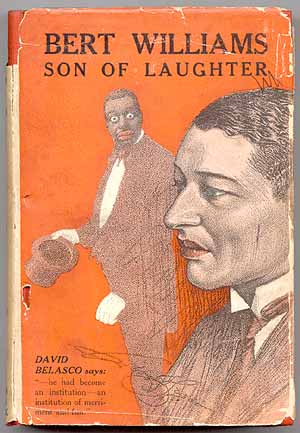
MAE WEST's idol was showman Bert Williams [1874 — 1922], who became the first African American performer in the Ziegfeld Follies from 1910 — 1920.
• • A new book has just been published about this outstanding entertainer.
• • Introducing Bert Williams: Burnt Cork, Broadway, and the Story of America's First Black Star
• • By Camille F. Forbes
• • [NY: Basic/ Civitas Books, 404 pages]
• • Michael Feingold's review for The Village Voice ["The Sad Funny Man: Rethinking the career of Bert Williams, who raised blackface to the level of an art form] begins like this:
• • Melancholy was his stock in trade. All his songs deal with misery, pain, and violence, usually visited on him. His primary activity in performance consisted of being lured from one hideous situation into a worse one. Onstage, his melancholy made audiences laugh immeasurably; offstage, a deeply inward soul, he carried it with him, retreating into his dressing room or his library at home to read philosophy and poetry. One of his dearest friends among the colleagues of his later career supplied the character matrix that everyone writing about him inevitably quotes: "[He] was the funniest man I ever saw, and the saddest man I ever knew."
• • Michael Feingold continues: The sad funnyman's name was Bert Williams. That the colleague quoted above was W.C. Fields, whose own melancholy ran nearly as deep, says something not only about the sadness of great comic artists but also about America. Bert Williams (1874–1922) was black. For an African-American in that time of upheaval, he had a life that might have seemed to justify only joy. One of the most beloved public figures of his day, a star whose name and stock phrases were known to virtually everybody, in good years he earned an income substantially above that paid to any public official, including the president. Though not a crusader by temperament, he used his position to make many small breaches in the Jim Crow barriers behind which African-Americans were then trapped: He led the first black theater troupe to play in a Broadway house, and the first to give a royal command performance in England. He was the first black artist to become a recording star, and the first to play a leading role on Broadway on an equal footing with white artists. He is, unmistakably, a hero of our culture. ...
• • Clearly appreciating the showmanship of versatile Bert Williams — — if not the talents of his latest biographer Camillie Forbes — — book reviewer Michael Feingold adds: Yet he was both a hero and a great artist. That comes through clearly in Camille F. Forbes's ploddingly written but exhaustive new biography, Introducing Bert Williams. Forbes, an academic preoccupied with the social meanings she can read into Williams's career, gives only a hollowly theoretical sense of his life and achievements as an artist, and her sense of the era's theatrical culture is erratic at best, but the social questions she belabors are those with which Williams grappled, and she leaves no doubt that "realness" was indeed the driving passion behind his art. ...
• • Luckily for us, Michael Feingold points out, Bert Williams left his monument on disc: The immaculate timing and ripe musicality of his songs and spoken routines (available on a 3-CD set from Archeophone) make the optimal antidote for Forbes's muzzy prose.
• • Michael Feingold's complete review was published in The Village Voice.
— — Excerpt: — —
• • The Sad Funny Man: Rethinking the career of Bert Williams, who raised blackface to the level of an art form.
• • by Book Reviewer Michael Feingold
• • Published in: The Village Voice — — www.villagevoice.com
• • Published on: 12 February 2008

• • Come up and see Mae every day online: http://MaeWest.blogspot.com/
________
Source:http://maewest.blogspot.com/atom.xml

• • Photo:
• • Mae West's idol • • Bert Williams • •

Mae West.

Friday, November 23, 2007

Mae West and "Nobody"

Stage star Lionel Perry [born in Key West, Florida in 1902] seems to have modeled his act on MAE WEST's favorite: the great black minstrel and vaudevillian Bert Williams [12 November 1874 – 4 March 1922].
• • In an interview with Charlotte Chandler, Mae described meeting the great Bert Williams when she was a child. Little Mae was so enchanted by him that she had learnt his theme song "Nobody" along with copying the superb timing and gestures that Bert Williams used to dramatize the sad words. This number was unusual for Mae, who never liked anything downbeat.
• • Knowing how much his daughter idolized the star, Mae's father made his acquaintance and invited him home in 1903. Unfortunately, Mae did not recognize the mocha-skinned West Indian entertainer without his blackface make-up and ran into her room crying, "It's not him!" To convince her, Bert Williams started to sing, whereupon Mae emerged from her bedroom and happily sat down to supper with Bert Williams and her family.
• • Bert Williams went on to star on Broadway in the Ziegfeld Follies and In Dahomey. Mae West remained a lifelong admirer of his comedic talents.
• • [Source: Charlotte Chandler, The Ultimate Seduction, Doubleday, 1984.]
• • Nobody: Since she sang the song for years in vaudeville as an amateur, Mae West would have known that Alex Rogers and Bert Williams co-wrote the song "Nobody" [New York: Attucks Publishing Co., 1905]. Though the cover of the song sheet shows Williams in blackface, it avoids the grotesque caricatures common in sheet music at the time. The song was published by the Attucks Publishing Co. (later Gotham-Attucks), the only notable black-owned music publishing company in New York before the 1920s. The firm was named for Crispus Attucks [c. 1723 – 5 March 1770], the martyred black sailor of the American Revolution. "Nobody" was the firm's biggest success.
• • Come up and see Mae every day online: http://MaeWest.blogspot.com/
________
Source:http://maewest.blogspot.com/atom.xml

• • Photo: • • Mae West's idol • • Bert Willaims • •

Mae West.

Saturday, March 03, 2007

Mae West: Bert Williams


MAE WEST adored the vaudevillian Bert Williams.
• • "Baby Mae" performed his famous song "Nobody" during her earliest amateur outings, impersonating her idol with accuracy.
• • Bert Williams [12 November 1874 – 4 March 1922], the pre-eminent Black entertainer of his era (birthname Egbert Austin Williams), was born on the island of Antigua [West Indies]. In 1888 his family moved to Los Angeles. He began his entertainment career in 1892 in San Francisco.
• • Bert Williams became one of vaudeville's top names, both as a solo performer and as part of the successful team "Williams & Walker" with partner George Walker. Together they popularized the Cakewalk. Light-skinned, the Caribbean native was also famous for performing in blackface.
• • After George Walker's death, Williams appeared with Eddie Cantor and in major shows such as the Ziegfeld Follies.
• • After collapsing onstage on 25 February 1922 while singing "Under The Bamboo Tree," Bert Williams died in a hospital on March 4th. He was 48 years old.
• • Last year two books about his outstanding career were published.
• • Come up and see Mae every day online: http://MaeWest.blogspot.com/
________
Source:http://maewest.blogspot.com/atom.xml

Add to Google

• • Artwork: • • Bert Williams • • 1919 • •

Mae West.